Market Update
Where mortgage rates stand and what it means for Boise buyers
If you've been watching mortgage rates from the sidelines, the past few months have offered a familiar mix of hope and hesitation. As of late June 2026, the benchmark 30-year fixed mortgage rate sits in the mid-to-high 6% range — down from the cycle peaks we saw in late 2023 and early 2024, but still well above the sub-3% environment that defined 2020 and 2021. The question everyone asks me is the same one: where do rates go from here, and what does that mean if you're buying or selling a home in Boise right now?
Where rates are today
The 30-year fixed rate is hovering around 6.7–6.9%, depending on the lender, the borrower's credit profile, and the day's MBS pricing. The 15-year fixed sits a half-point or so below that. FHA and VA products remain slightly lower, which matters in a market like Boise where a meaningful share of buyers — particularly veterans and first-timers — use government-backed financing.
Those numbers represent real progress compared to where we were eighteen months ago. The peak in this cycle touched the mid-7% range, and every quarter-point drop translates into roughly $40–50 per month on a typical purchase in the Boise market. For a home in the $650K–$800K range — the sweet spot for executive homes like 7967 S Rafael Way — that difference adds up over the life of the loan.
What the forecasts say
The major housing economists — from the Mortgage Bankers Association to Freddie Mac's quarterly outlook — have been converging on a gradual downward path through the second half of 2026 and into 2027. The general consensus is that the 30-year fixed will settle into the low-to-mid 6% range by year-end, with some forecasters projecting a push toward 6.25% by mid-2027 if inflation continues its slow retreat and the Federal Reserve maintains its current easing posture.
Nobody's forecasting a return to 3% — that was a once-in-a-generation anomaly driven by pandemic-era policy. But the direction is clearly friendlier than it was twelve months ago, and the consensus is that the worst of the rate environment is behind us. For buyers who've been waiting for a "sign," the gradual decline itself is the sign.
What this means for Boise buyers
Here's the reality I share with every buyer I work with: waiting for the perfect rate is a strategy that almost never pays off, because the home you're buying also appreciates while you wait. In Boise specifically, well-priced homes in desirable corridors — Southwest Boise, the Bench, Eagle, Meridian — have continued to hold value. Inventory is tighter than it was a year ago in the $500K–$900K range, and the homes that show well and are priced right are still moving in the first two to three weeks.
A rate of 6.75% on a $700,000 purchase with 20% down means a monthly principal-and-interest payment of approximately $3,630. If you wait six months and rates drop to 6.25%, that same payment drops to roughly $3,490 — about $140/month. But if the home appreciates 3–5% in that same window (consistent with Boise's recent trajectory), you're paying $21,000–$35,000 more for the house. The math almost always favors buying when you find the right home.
The other factor that doesn't get enough attention: you can always refinance. A buyer who purchases today at 6.75% and refinances in 12–18 months when rates ease further has effectively bought at the lower rate — but they've locked in the home price from today, not from tomorrow.
What this means for sellers
For sellers, the improving rate environment is a tailwind. When rates drop even modestly, buyer purchasing power expands, and that brings more qualified buyers into the market. We're already seeing it in Boise: open-house traffic has picked up compared to the same period last year, and well-staged homes in the $600K–$800K range are generating multiple offers again — not at the frenzied pace of 2021, but with enough competition to keep final sale prices close to or above asking.
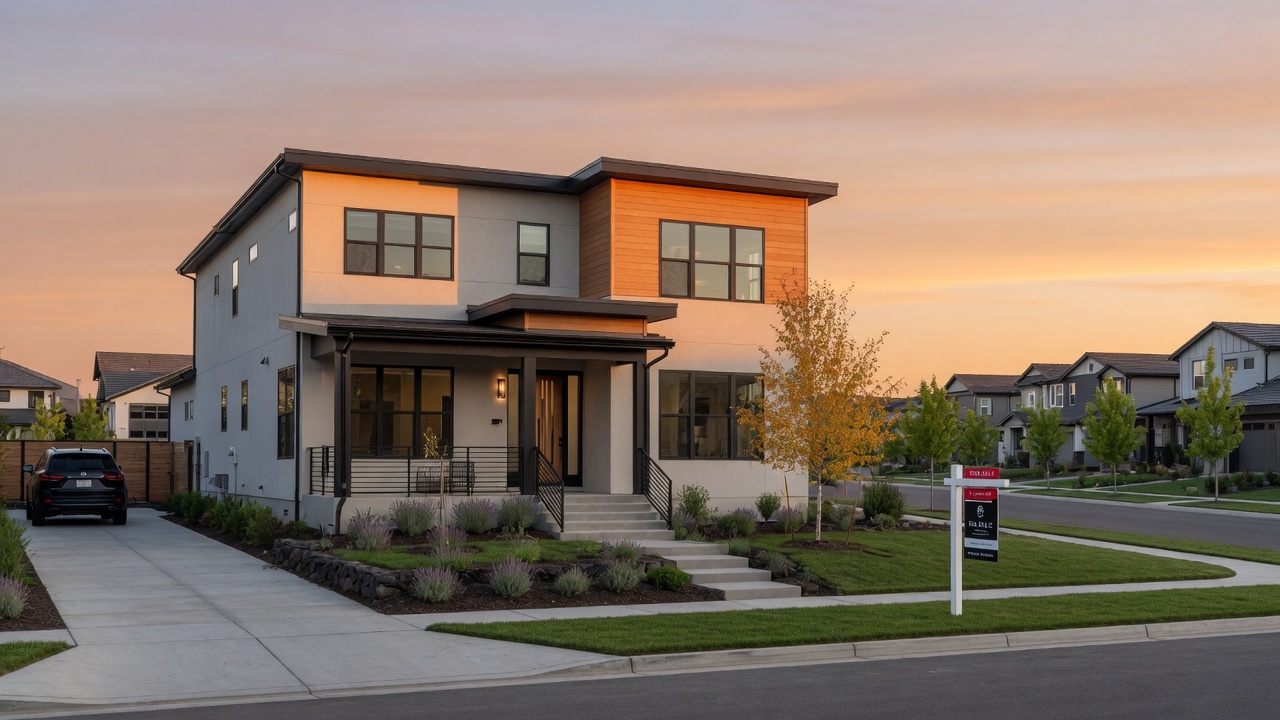
If you're considering selling a home like 7967 S Rafael Way — a well-maintained executive home on a premium lot — the current market rewards preparation. Homes that show well, photograph well, and are priced with the data (not aspirationally) are the ones capturing buyer attention. The park-backed lots, the finished basements, the locations near I-84 and The Village — these are the features that make buyers willing to act decisively when they find them.
Practical advice from the field
After 25 years in Boise real estate, I've learned that the buyers who do best are the ones who make decisions based on their own readiness, not the headlines. Here's what I'd tell anyone weighing their options right now:
Get pre-approved, not just pre-qualified. A full pre-approval letter from a local lender — not just an online estimate — tells sellers you're serious and gives you a clear picture of your actual monthly payment at today's rates. I recommend working with a lender who knows the Idaho market.
Run the numbers at today's rate, not a future one. If the monthly payment works for you at 6.75%, you're in a strong position. If rates drop further, you refinance and save. If they stay flat, you've still bought a home at a fair price in a market with long-term fundamentals.
Don't overlook the total cost of waiting. Rent, opportunity cost, and home appreciation all work against the "wait and see" approach. In Boise, where population growth and employment remain solid, the long-term trajectory favors ownership over renting for most buyers who plan to stay three or more years.
Consider the full financial picture. A home at $750,000 with a 6.75% rate and 20% down may cost less per month than you think when you factor in tax benefits, the forced savings of equity building, and Boise's relatively low property-tax burden compared to national averages.
The Boise market in context
Boise remains one of the most attractive mid-sized metros in the West. Population growth continues to outpace the national average, employment is diversified beyond any single sector, and the quality-of-life factors — outdoor access, lower cost of living than coastal markets, a genuine community feel — keep drawing relocating professionals from California, Washington, and Oregon. Mortgage rates are one variable in the equation, but the underlying demand for homes in this market is structural, not cyclical.
For buyers considering homes in the Southwest Boise corridor — like 7967 S Rafael Way — the combination of an improving rate environment, a tight-but-fair inventory situation, and a home that offers genuine value compared to new construction is as good a setup as I've seen in the past two years.
The bottom line
Rates are better than they were, and the trend is your friend. If you've been on the fence, this is the time to have a real conversation about your options — not with a YouTube algorithm, but with a local agent who can walk you through the numbers for your specific situation. I've helped hundreds of buyers navigate rate environments higher than this one, and the ones who are happiest long-term are the ones who bought a home they loved at a payment they could handle.
Whether you're looking at 7967 S Rafael Way or any other property in the Treasure Valley, I'm happy to talk through the financing side, connect you with a lender I trust, and make sure you're making a decision grounded in facts — not fear.